
Panels That Keep Up With Current Electrical Demand
Electrical panel upgrades in Kansas City for homes and buildings where 100-amp service can no longer carry heating, cooling, and appliance loads without tripped breakers
A significant portion of Kansas City's residential housing stock was built during the postwar decades when 100-amp service was standard and the average home drew a fraction of today's electrical load. Galvin Electric Company, Inc. performs panel upgrades and installations across Kansas City for properties where that original service size creates persistent tripped breakers, overloaded circuits, or outright safety hazards. Upgrading to 200-amp service isn't simply a capacity increase—it also brings the panel and service entrance into current code compliance, which matters both for daily function and for any future sale or renovation permit.
The process begins with a load assessment that accounts for your current circuits and anything you plan to add—HVAC equipment, EV chargers, kitchen appliances, or additional subpanels. Galvin Electric sizes the new panel to handle both the present load and reasonable future demand, installs the new enclosure, and carefully relocates existing circuits into correctly sized breakers. If the incoming service lines from the utility require replacement to match the new service rating, that work is scoped and included. Every breaker and ground bond is tested before the city inspection is scheduled, and the panel isn't energized until the inspector signs off.
Request a load assessment to confirm whether your current panel size is the source of the problems you're experiencing before committing to a specific upgrade scope.
Why Panel Sizing Decisions Matter Beyond the Box Itself
Selecting a new panel involves more than matching the incoming service amperage. The number of available breaker slots determines how cleanly circuits can be separated—doubling up circuits on tandem breakers is a common shortcut that limits future flexibility and can mask overloading. When Galvin Electric installs a new panel, the breaker slot count is selected to give each major appliance circuit its own dedicated position, with additional capacity reserved for circuits you haven't added yet.
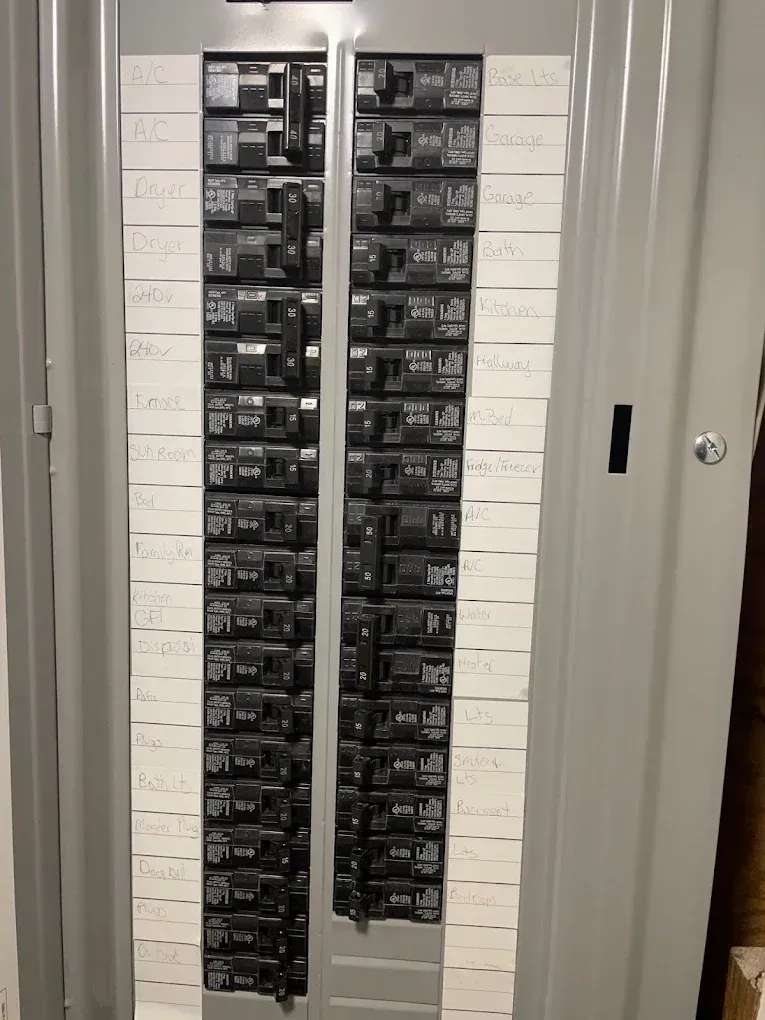
After the upgrade, the most immediate change is behavioral: appliances that previously caused other devices to dim or shut down will run without interference, and breakers that were tripping under normal load will hold. The panel directory is labeled clearly for every circuit so the function of each breaker is identifiable without tracing wires. Older Gladstone properties that were expanded with garage additions or finished basements often have undocumented circuits added over the years—part of the upgrade process is identifying and properly labeling those runs.
Galvin Electric holds both Johnson County and Kansas City business licenses and offers five documented service plans that cover ongoing panel maintenance after installation. Labor and materials are included in the project bid, and city inspection coordination is handled by Galvin Electric so you don't manage that process separately.
What Property Owners Ask About the Upgrade Process
Panel upgrades involve several interconnected decisions—service size, breaker count, circuit relocation, and inspection sequencing. The answers below explain what actually happens during the work.
How is the correct panel size determined for a specific property?
Load calculations are based on the square footage, the amperage draw of existing equipment, and any circuits planned for the near future—a panel that works for today but leaves no room for an EV charger or added HVAC zone will need to be replaced again sooner than expected.
What happens to existing circuits when a new panel is installed?
Each circuit is disconnected from the old panel, the wire is pulled through and reterminated under the correct breaker amperage in the new enclosure, and the breaker-to-circuit relationship is documented before the panel is closed.
Why do ground bonds need to be tested before inspection?
A ground bond failure means fault current has no safe path back to the panel—a condition that won't trip a breaker but creates a shock hazard at metal fixtures and equipment cases, so each bond is tested individually with a multimeter before the city inspector is called.
How does the age of Kansas City residential construction affect the panel upgrade scope?
Homes built in the 1950s and 1960s in neighborhoods like Lenexa often have aluminum branch wiring for some circuits, which requires specific breaker types and termination methods to remain code-compliant when relocated into a new panel.
What is included in the inspection coordination step?
Galvin Electric schedules the city inspection, provides the inspector access to the panel and service entrance, and confirms all open items are resolved before sign-off—the circuit is not energized until that approval is received.
Galvin Electric Company, Inc. also performs panel upgrades in Overland Park, Lenexa, Lee's Summit, Olathe, and Belton. If your current panel is tripping regularly or you're planning an addition that will add substantial electrical load, connect with Galvin Electric to schedule a load assessment and review upgrade options for your specific building.