Whole-Home Power Loss Requires Methodical Diagnosis
Electrical Service Repair in Kansas City for full or partial power loss, flickering circuits, and main panel failures
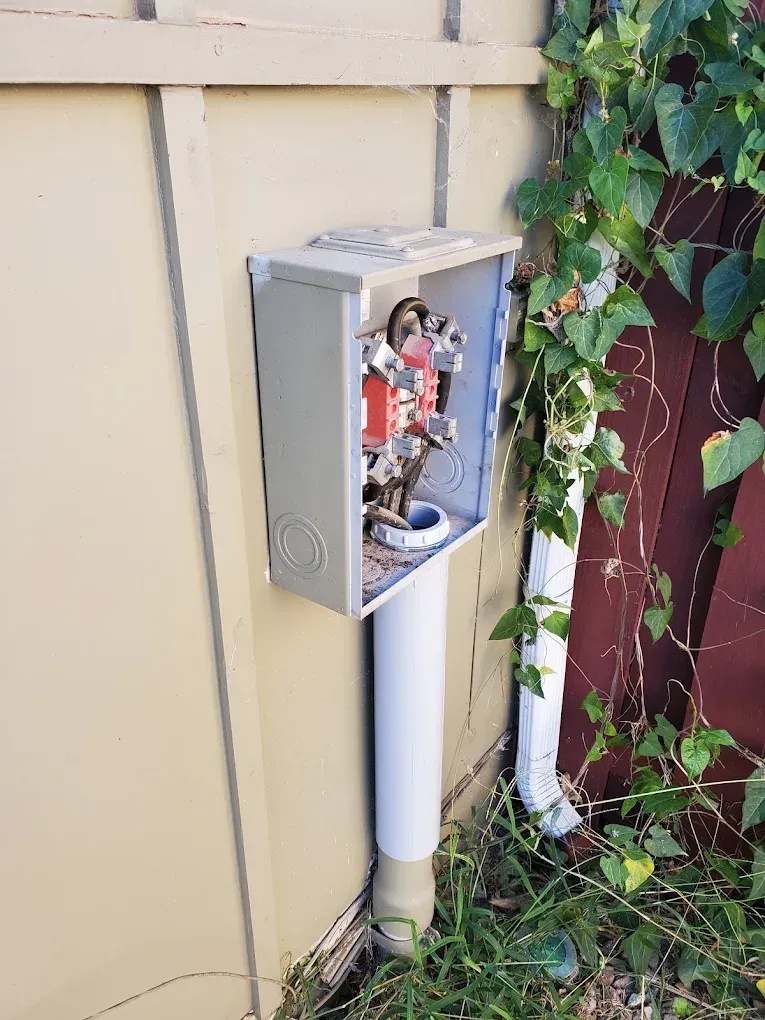
Partial power loss in a Kansas City home or business—lights on one side of a building while appliances on another circuit are completely dead—is a recognizable symptom of a specific failure: one leg of the 240-volt service entrance has been interrupted at the meter, the main breaker, or the utility connection. Galvin Electric Company, Inc. provides electrical service repair for these situations, working from the meter base inward to identify exactly where the fault is located and what needs to be corrected. Skipping to panel repairs before confirming whether the problem is utility-side or customer-side wastes time and leaves the actual cause unaddressed.
The diagnostic sequence begins at the meter and the service entrance conductors, then moves to the main breaker and the distribution panel. Galvin Electric checks for overloads and faults across individual circuits, inspects the utility connection for loose or corroded service conductors, and tests the main breaker under load to determine whether it is holding correctly. For customers with ongoing reliability concerns, Galvin Electric offers five documented service plans that cover scheduled inspections and priority response, reducing the time between a developing fault and correction before it becomes a full outage.
Request a service entrance evaluation to identify whether the problem originates at the panel, the meter, or the utility connection point.
Why the Fault Location Changes the Repair
Electrical service problems in Kansas City range from single-circuit trips that stay within the panel to full power loss that involves the utility connection—and the repair required for each is fundamentally different. A fault inside the panel may involve a failed main breaker, a damaged bus bar, or a loose neutral connection; a fault at the meter base involves the utility company's equipment and requires coordination with the utility before customer-side repairs can proceed. Galvin Electric's technicians test both sides of that boundary, which means the crew arrives knowing which entity is responsible for which portion of the repair rather than discovering it mid-job.
After the fault is corrected, the observable result depends on the failure type: full power is restored across all circuits, flickering stops on circuits that were showing voltage fluctuation from a loose neutral, and appliances that had been starved of correct voltage—motors running hot, HVAC units short-cycling—return to normal operation. Galvin Electric tests the panel under load before closing the job to confirm that all circuits are receiving correct voltage and that the main breaker is holding.
Galvin Electric holds active business licenses in Kansas City and Johnson County for residential and commercial electrical service work. Service plan customers receive scheduled maintenance visits that catch loose connections, corroded terminals, and degrading breakers before they develop into service interruptions—each of which is documented in the service record.
Questions Before Starting Your Project
These questions address how electrical service diagnosis works, what technicians look for at the panel and meter, and how Kansas City properties are affected by the condition of their service entrance equipment.
What does it mean when lights flicker and a breaker keeps tripping at the same time?
Simultaneous flickering and tripping points toward a loose or corroded neutral conductor somewhere between the utility connection and the panel; a loose neutral causes voltage to fluctuate unevenly across the two legs of the service, which makes lights dim and dim-sensitive breakers trip under loads they would otherwise hold without issue.
How does a technician determine whether a power problem is inside the panel or at the meter?
Voltage readings taken at the meter base and at the main breaker input will show whether full service voltage is arriving from the utility; if voltage is correct at the meter but degraded at the main breaker terminals, the fault is inside the customer's equipment—if the meter itself shows low or absent voltage on one leg, the utility connection or utility equipment is involved.
What causes partial power loss where some circuits work and others are completely dead?
Two-hundred-forty-volt residential service arrives on two legs, each carrying 120 volts; if one leg is interrupted at the main breaker or service entrance, all circuits connected to that leg go dead while the other leg remains live—this is why half a house can lose power without the main breaker tripping.
How does a service plan inspection differ from a one-time repair call?
A scheduled inspection reviews the condition of all breakers, bus connections, and service entrance conductors under controlled conditions rather than under fault conditions; technicians look for thermal discoloration on bus bars, measure breaker resistance, and check terminal torque—conditions that predict failure but don't yet show up as tripped breakers or dead circuits.
What should a Kansas City property owner check before calling for a service repair?
Confirm that the meter base and weatherhead are intact and that no service conductors have pulled away from the entry point on the exterior of the building; inside, check whether the main breaker has moved to a tripped position or whether individual circuit breakers are showing signs of having tripped—these observations help the technician prioritize where to begin testing when they arrive.
Galvin Electric Company, Inc. can schedule a diagnostic visit to trace the source of your power problem and outline what the repair involves before work begins. Galvin Electric also performs electrical service repair in Overland Park, Lenexa, Lee's Summit, Olathe, and Belton.