Generator Failure at the Wrong Moment Is a Solvable Problem
Generator Repairs in Kansas City for standby and portable units that won't start, won't hold a load, or have been out of service
Rural properties and outlying areas around Kansas City present a specific problem for generator owners: most electrical contractors decline service calls beyond their primary radius, which means owners of standby and portable units often discover the generator won't start only after losing power, with no service provider willing to make the trip. Galvin Electric Company, Inc. travels to rural service areas where other contractors typically won't go, servicing both standby and portable generators with a diagnostic approach that covers the fuel system, battery, transfer switch, and engine before any part is replaced.
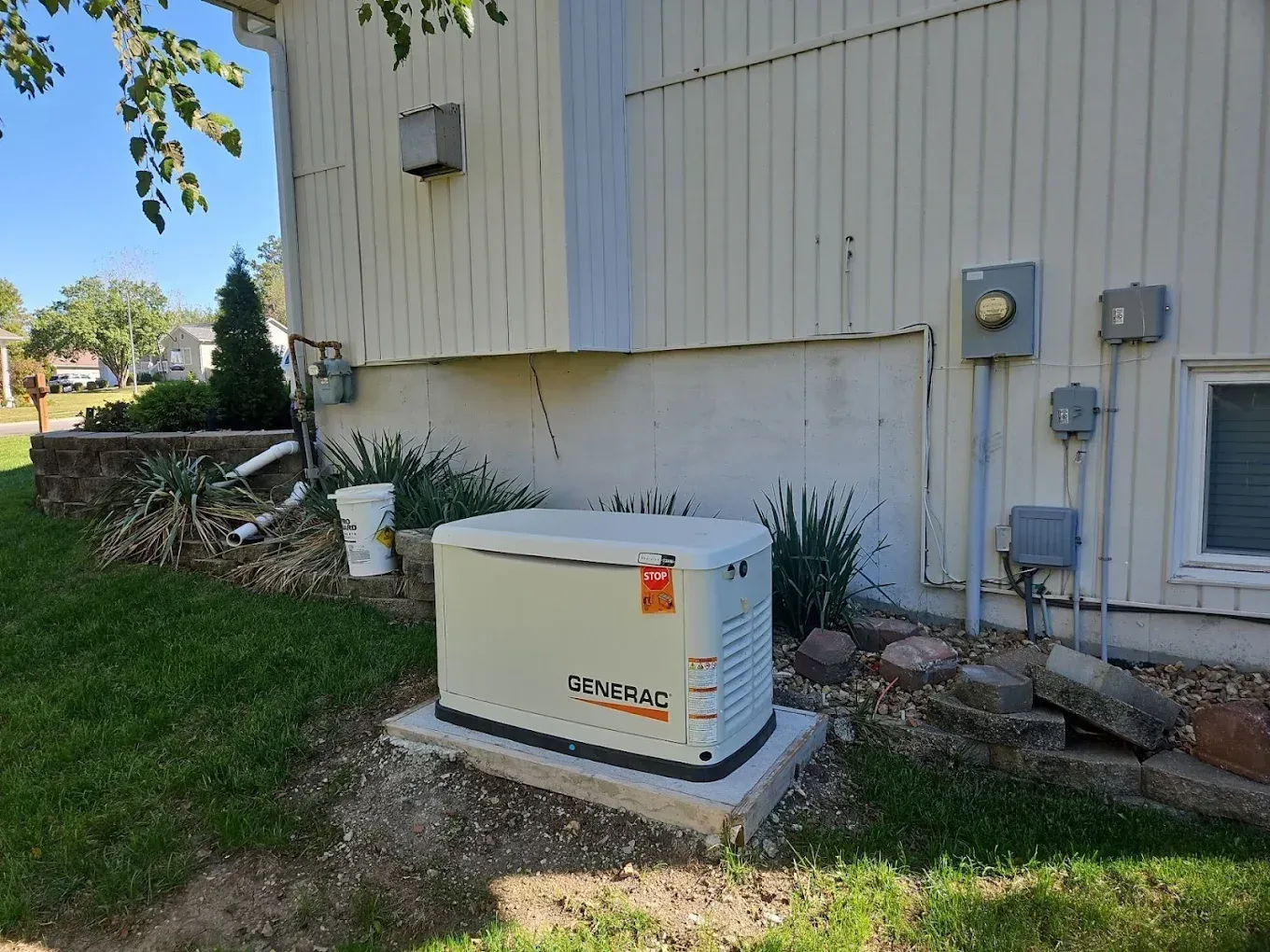
The inspection begins with a fuel system check—clogged fuel filters and stale fuel are among the most common reasons a standby generator fails to start after sitting unused—then moves to the battery, which loses capacity over time and may test within acceptable voltage range while still being unable to deliver the cranking current the starter motor requires. Transfer switch operation is confirmed separately, since a generator that starts and runs correctly can still fail to supply the building if the transfer switch doesn't shift under load. Galvin Electric's Generac partnership provides access to factory diagnostics and correct replacement parts for Generac units, which eliminates the delay of sourcing components through general suppliers.
Set up a generator inspection with Galvin Electric to assess whether your unit will perform correctly before it's called on during an outage.
What Generator Diagnosis Actually Covers
A load test is the diagnostic step that reveals whether a generator performs under real demand rather than just at idle. Running the generator under load—typically at 50 percent and then 75 percent of rated capacity—exposes voltage sag, frequency instability, and engine governor problems that don't appear when the unit simply idles in the driveway. Galvin Electric performs load testing as part of the repair process to confirm the unit will hold the connected equipment it is expected to power, not just that it starts and runs without a load attached.
After repairs are completed, the generator starts on the first or second crank, holds its rated output voltage within acceptable tolerance under load, and the transfer switch cycles correctly between utility power and generator power without requiring manual intervention. For Generac standby units, the control panel will clear fault codes that were present before service and the self-test cycle will complete without interruption—this is the most direct confirmation that the repair resolved the underlying fault rather than masking it.
Generator maintenance that prevents failure includes annual fuel filter replacement, battery load testing rather than voltage-only testing, exercise cycle verification to confirm the automatic start sequence is functioning, and inspection of the automatic transfer switch contacts for pitting or carbon buildup—each of these is a scheduled item in Galvin Electric's service plan coverage for generator customers in the Kansas City area and surrounding rural properties near communities like Blue Springs and Gladstone.
Common Questions About Generator Service
The questions below address how generator diagnosis and repair work in practice, including what technicians inspect, what causes common failure modes, and how to assess whether a generator is genuinely ready to operate.
What should a generator owner check before calling for a service appointment?
Verify that the fuel supply valve is open and that the fuel level is adequate, then check whether a fault code is displayed on the control panel—Generac units display specific fault codes that narrow the diagnosis before a technician arrives; also confirm the battery disconnect switch is in the on position, since many owners inadvertently leave it off between uses.
How does a technician confirm that a generator battery needs replacement rather than just a charge?
A battery load test applies a controlled discharge to the battery while measuring voltage drop under that load; a battery that holds voltage at rest but collapses below the starter threshold under load will not start the generator in the field, and a voltage-only test with a standard multimeter will miss this failure entirely—load testing is the only reliable method.
Why does a generator that starts and runs correctly sometimes fail to power the building during an outage?
The automatic transfer switch is a separate component from the generator itself; if the transfer switch contacts are pitted or the switch fails to actuate under load, utility power is disconnected but generator power is never connected to the building's panel—the generator runs unloaded while the building stays dark.
What does a fuel system inspection cover on a standby generator?
Technicians check the fuel filter for restriction, inspect the fuel solenoid valve for correct operation, and verify that the carburetor or fuel injectors are not blocked by varnish deposits from stale fuel—gasoline left in the system for more than three to six months degrades and leaves residue that blocks fuel delivery components and prevents starting.
How does load testing confirm that a repaired generator is genuinely ready for service?
Load testing at 50 percent and 75 percent of rated capacity while measuring output voltage and frequency confirms the engine governor is holding speed correctly and that the alternator is producing stable voltage under demand; a unit that passes load testing will power connected equipment without voltage sag or frequency instability during an actual outage.
Galvin Electric Company, Inc. is equipped to diagnose and repair your generator at your property, including rural locations outside the city. Galvin Electric also performs generator repairs in Overland Park, Lenexa, Lee's Summit, Olathe, and Belton.