Backup Power Without the Last-Minute Scramble
Generator Installation in Kansas City for homes and businesses that cannot afford unplanned downtime
Galvin Electric Company, Inc. installs standby and portable generators for residential and commercial properties throughout Kansas City, handling every stage from load calculation to final inspection. Homeowners who have lost refrigerated food, sump pump function, or heating during an outage understand the difference between a permanent standby system and a portable unit pulled from storage after the fact. The choice between those two options is the first decision Galvin Electric helps clients make correctly.
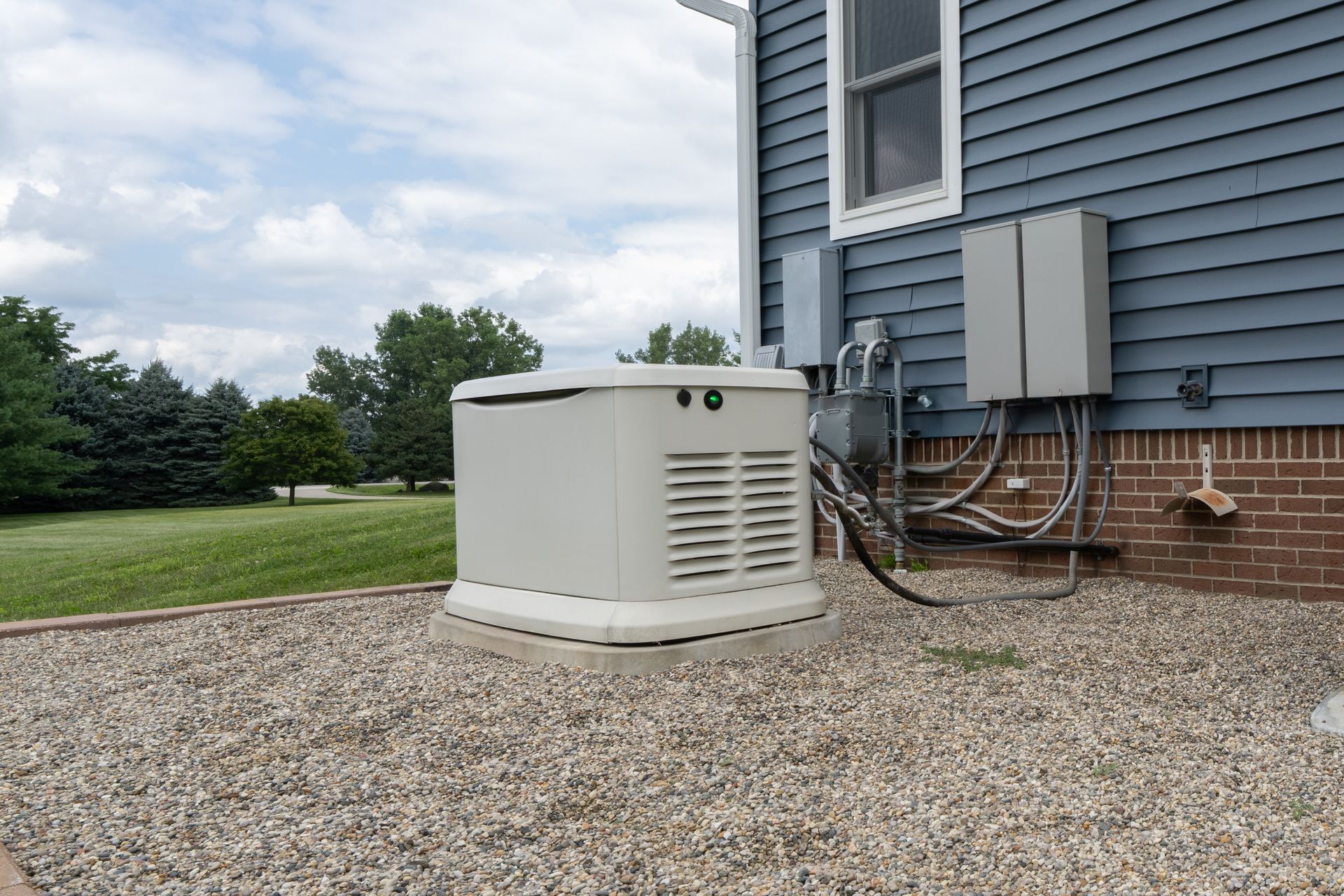
The installation process begins with a load calculation that determines how much power the property actually requires. Whole-home backup restores every circuit when the grid drops; essential-circuits backup covers a defined set of loads—refrigerator, sump pump, select lighting, medical equipment—at a lower equipment cost. Fuel source selection follows: natural gas connects to an existing utility line and eliminates refueling; propane suits properties without gas service; diesel offers high output for commercial applications but requires on-site fuel management. Once those decisions are made, Galvin Electric installs the automatic transfer switch that detects an outage, disconnects the property from the utility grid, and starts the generator—all without manual intervention and in full compliance with local code.
Request a site evaluation to review your load requirements and discuss which configuration fits your property.
What Proper Generator Installation Actually Requires
Siting a standby generator involves more than finding open yard space. The unit must meet setback requirements from windows, doors, and gas meters; the transfer switch must be wired to prevent back-feed onto the utility line; and the installation must pass municipal inspection before it is placed in service. Galvin Electric manages permitting and inspection scheduling so that nothing about the installation creates a code deficiency later discovered during a home sale or insurance claim.
Once installed and tested, a standby generator starts automatically within seconds of detecting a grid failure. You will notice the transition as a brief pause followed by normal power restoration—lights return, the sump pump resumes, the HVAC system restarts on its own schedule. That automatic response is what separates a properly installed transfer switch from an extension-cord workaround, and it is the detail that matters most when an outage happens at two in the morning.
Galvin Electric also structures maintenance plans so that the generator runs a timed self-test weekly, oil and filter intervals are tracked, and the system is ready when it is actually needed. Deferred maintenance is the most common reason a standby unit fails to start during an actual outage—routine service is part of the installation commitment, not an afterthought.
Common Questions About Generator Installation
The questions below address how generator installation works in practice, including decisions that affect long-term performance in Kansas City properties of varying size and age.
What is the difference between a standby generator and a portable generator?
A standby generator is permanently sited, connected to a fuel supply, and wired through an automatic transfer switch so it starts on its own during an outage. A portable unit requires manual setup, external fuel, and extension cords or a manual transfer switch, and cannot legally be connected directly to a home's electrical panel without proper switching equipment.
How is the right generator size determined?
A licensed electrician performs a load calculation that tallies the wattage of every circuit or appliance intended to run during an outage. Undersized units drop voltage under load, which damages motors and electronics; oversized units run inefficiently and wear faster than necessary.
What does an automatic transfer switch actually do?
The transfer switch monitors utility voltage continuously. When it detects a loss of grid power, it isolates the property's wiring from the utility line—a required safety step that protects utility workers—then signals the generator to start and connects the home or business to generator power.
How does fuel type affect the installation in an older Kansas City property?
Homes built before the 1980s in Kansas City often lack a natural gas meter sized for generator demand, which means a gas line upgrade may be part of the project scope. Propane is sometimes the faster path for those properties because a tank can be sited independently of existing utility infrastructure.
What maintenance does a standby generator require after installation?
Most standby systems are programmed to perform a weekly exercise cycle that runs the engine under light load. Full service intervals—oil, filters, spark plugs, coolant checks—are typically scheduled annually or according to run-hour thresholds set by the manufacturer.
Galvin Electric Company, Inc. also installs generators in Lee's Summit, Independence, Overland Park, and Olathe. To move forward with a load calculation and equipment recommendation for your property, contact Galvin Electric Company, Inc. directly to arrange an on-site assessment.